Washing Machine Flood in Eagle Trace: Water Damage Repair
A washing machine flood is one of the fastest ways to soak a Eagle Trace home. A burst supply hose can push out 6 gallons per minute, and a failed drain pump can dump a full tub of soapy water across your laundry room floor in under two minutes. If the machine is on a second floor, that water races through subfloors, light fixtures, and drywall before you finish unplugging the unit.
This guide is built for the homeowner standing in a wet laundry room right now. You will find a quick answer, a step by step response checklist, repair scope by water category, realistic cost ranges for Eagle Trace and the surrounding Central Indiana area, and what to expect from a professional crew. Eagle Trace Water Restoration has handled washing machine losses since 2018, we hold IICRC certifications in water restoration, and we carry a BBB A+ rating. If your situation does not need a full restoration company, we will tell you directly so you can save the call out fee. If it does, you will know exactly what the next 72 hours look like before a technician knocks on your door.
Quick Answer: What To Do Right Now
Shut off the water supply valves behind the washer, unplug the unit, and stop the bleed. Move wet items off the floor, pull back rugs, and start documenting with photos and short videos. If water reached drywall, baseboards, hardwood, or a finished room below, call a licensed water restoration company within 24 hours to prevent secondary damage and mold growth.
Insurance Claim Tips That Help You Win
- Report the loss the same day it happens, not the next week.
- Save the failed hose, pump, or valve for the adjuster to inspect.
- Ask for the claim number and adjuster contact in writing.
- Request that your restoration contractor be approved for direct billing.
- Keep a daily log of crews on site, equipment running, and rooms affected.
- Photograph drying equipment in place each day so the timeline is easy to verify later.
What Professional Repair Looks Like
A proper response in Eagle Trace follows a predictable sequence. Skipping steps is how homes end up with hidden mold six weeks later.
Inspection And Moisture Mapping
- Thermal imaging across walls and ceilings below the laundry room.
- Pin and pinless moisture meters on drywall, baseboards, and subfloor.
- Category determination based on source and contact time.
- Scope written for your adjuster with line items in Xactimate format.
- Cavity probes into wall bases and under cabinet toe kicks to confirm hidden saturation.
Extraction And Structural Drying
- truck mounted or portable extractors for standing water.
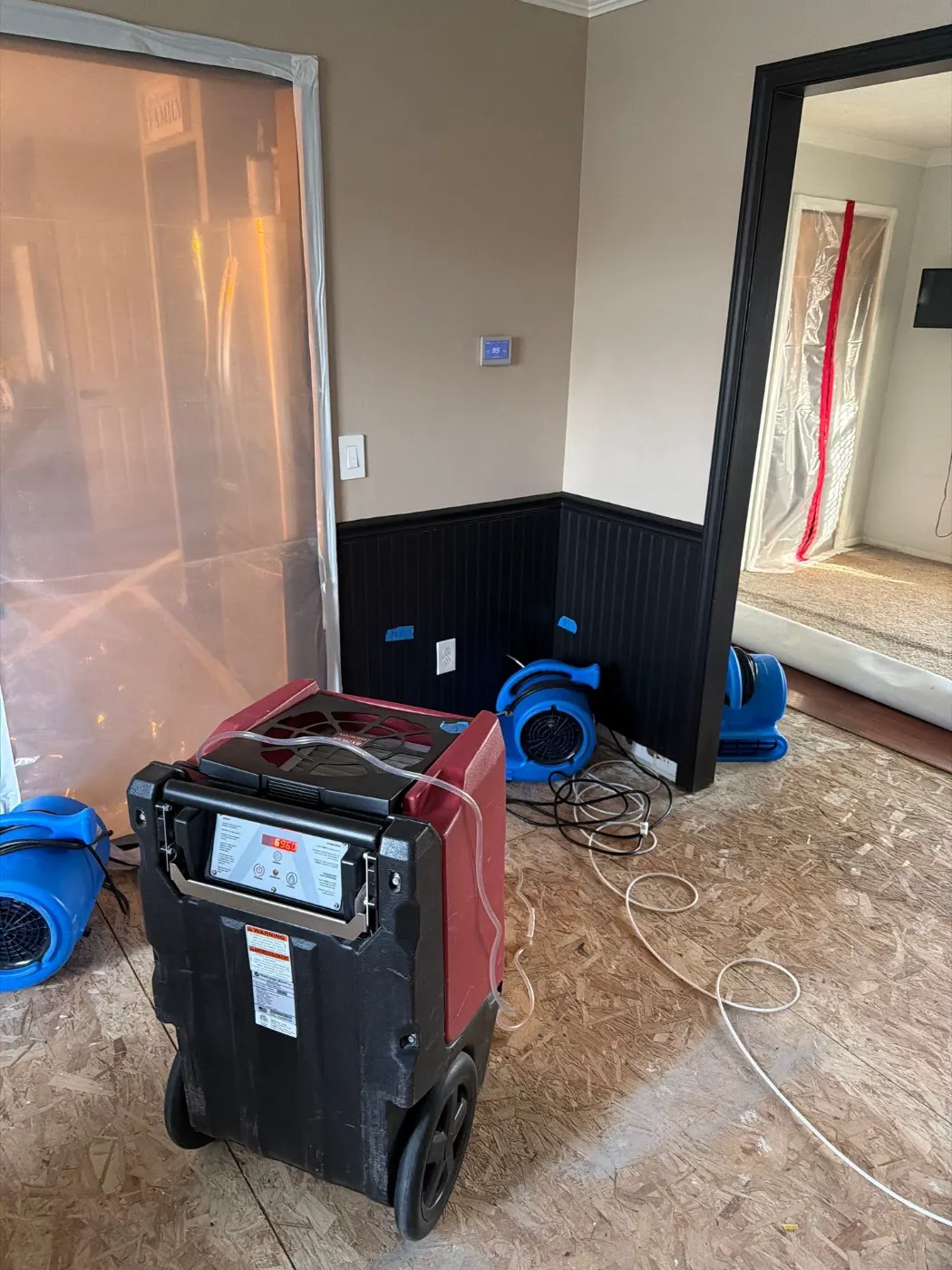
- Air movers placed every 10 to 16 linear feet along wet walls.
- LGR dehumidifiers sized to the cubic footage and grain load.
- Daily moisture readings logged until materials hit dry standard.
- Containment plastic hung at doorways to protect dry rooms and shorten drying time.
Demolition When Needed
Wet carpet pad almost always comes out. Drywall that wicked more than the bottom 2 inches usually needs a flood cut at 24 inches. Cabinet kicks, hardwood, and insulation behind walls get evaluated case by case. If the flood pushed into a finished lower level, our basement flooding service page explains how we handle multi level losses.
Why Washing Machine Floods Get Worse Fast
Laundry rooms in Eagle Trace homes are often tucked against shared walls, near HVAC returns, or directly above finished basements. That layout turns a small leak into a multi room loss in a hurry.
- Supply hoses fail at the connection or burst from rubber fatigue, usually after 5 to 8 years.
- Drain pumps clog with lint, coins, or small clothing items and back up onto the floor.
- Door seals on front load units crack and leak slowly behind cabinets where you cannot see it.
- Standpipes overflow when the drain line is partially blocked further down the system.
- Pressure switches and water inlet valves stick open, letting the drum overfill during an unattended cycle.
Water Categories You Need To Know
The IICRC S500 standard sorts water losses into three categories. The category drives what gets dried, what gets cut out, and what your insurance will cover.
| Category | Source | Typical Action |
|---|---|---|
| Cat 1 (Clean) | Supply line burst, fresh water | Extract, dry in place, monitor |
| Cat 2 (Gray) | Soapy wash water, detergent residue | Extract, sanitize, remove pad and wet drywall |
| Cat 3 (Black) | Sewage backup through standpipe | Remove porous materials, full disinfection |
Keep in mind that a Cat 1 loss can degrade to Cat 2 within 48 hours if it sits, and to Cat 3 after 72 hours. Time on the floor matters as much as the original source.
Hidden Damage To Check After Drying
Even after equipment comes down and the readings look good, some failures take weeks to show. Walk through these spots at the 2 week and 6 week marks.
- Baseboards for cupping, paint blistering, or a musty smell at floor level.
- Laminate seams swelling or lifting near the washer pan.
- Ceiling paint below the laundry room for ring stains or sagging texture.
- Door frames and casings that no longer sit flush against the wall.
- Cabinet hinges showing rust, which signals trapped moisture in the box.
Realistic Cost Ranges In Eagle Trace
| Scope | Typical Range |
|---|---|
| Laundry room only, Cat 1, dry in place | $900 to $2,400 |
| Laundry plus adjacent room, drywall removal | $2,500 to $6,500 |
| Two story loss with ceiling damage below | $6,000 to $14,000 |
| Cat 3 backup through standpipe | $4,500 to $12,000 |
Most homeowner policies cover sudden discharge from an appliance. Slow leaks that went unnoticed for weeks are often denied. For a full pricing breakdown, see our water damage restoration cost guide.
Call Before the Drywall Comes Down
Every washer flood story above shares one detail. The homeowners who called within the first two hours kept their repair bills lower, kept their flooring, and kept their claims clean. The ones who waited paid for it twice. If your washing machine just flooded a room in Eagle Trace, Eagle Trace Water Restoration runs 24 7 emergency response with IICRC certified techs, BBB A+ rating, and direct insurance billing. We will scope the loss honestly, document everything for your adjuster, and dry it right the first time.
Your First Hour: Step By Step
- Close the hot and cold shutoff valves behind the machine.
- Unplug the unit. If the outlet is wet, kill power at the breaker first.
- Pull wet laundry out of the drum and move it outside or to a tub.
- Lift furniture legs onto foil or foam blocks to stop wicking.
- Place towels at thresholds to stop water from spreading to other rooms.
- Open windows if the weather allows, but skip this if humidity outside is above 70 percent.
- Photograph every wet surface, the machine, the hoses, and the serial plate.
- Call your insurance carrier and a restoration contractor in parallel.
For deeper extraction guidance, our water extraction services overview walks through how professionals pull water from carpet pad, subfloor seams, and wall cavities that towels cannot reach.
Prevention After The Repair
- Replace rubber supply hoses with braided stainless steel rated for 1,500 psi.
- Install a leak detection shutoff valve on the laundry circuit.
- Pull the machine forward once a year to inspect connections.
- Never run a wash cycle when the house is empty.
- Clean the drain pump filter every 3 to 6 months on front load units.
- Add a drain pan with a sensor under the washer, especially on upper floors.
Frequently Asked Questions
How fast do I need to act after a washing machine flood?
Within the first hour for extraction, within 24 hours for full drying setup. After 48 hours, clean water degrades to Category 2 and mold risk climbs sharply in Eagle Trace humidity.
Will homeowners insurance cover a washing machine flood in Eagle Trace?
Usually yes, if the leak is sudden and accidental. Eagle Trace Water Restoration documents the loss with IICRC standards so your adjuster has what they need to approve the claim quickly.
Can I dry the laundry room myself with fans?
Box fans move air but do not remove moisture from wall cavities or subfloors. Without commercial dehumidifiers and moisture meters, you risk hidden mold within 2 to 4 weeks.
How much does washing machine flood cleanup cost?
Most Eagle Trace jobs run $3,500 to $7,500 when caught within 24 hours. Larger losses with ceiling damage or Category 2 water can reach $10,000 or more.
Does Eagle Trace Water Restoration work directly with my insurance company?
Yes. We bill the carrier directly when possible, provide daily moisture logs, photo documentation, and Xactimate scoped estimates that adjusters across Eagle Trace recognize and approve.
Have a restoration question?
Our IICRC certified Eagle Trace crew is ready to help. Free assessments, estimate based on what we can sees, no pressure.